
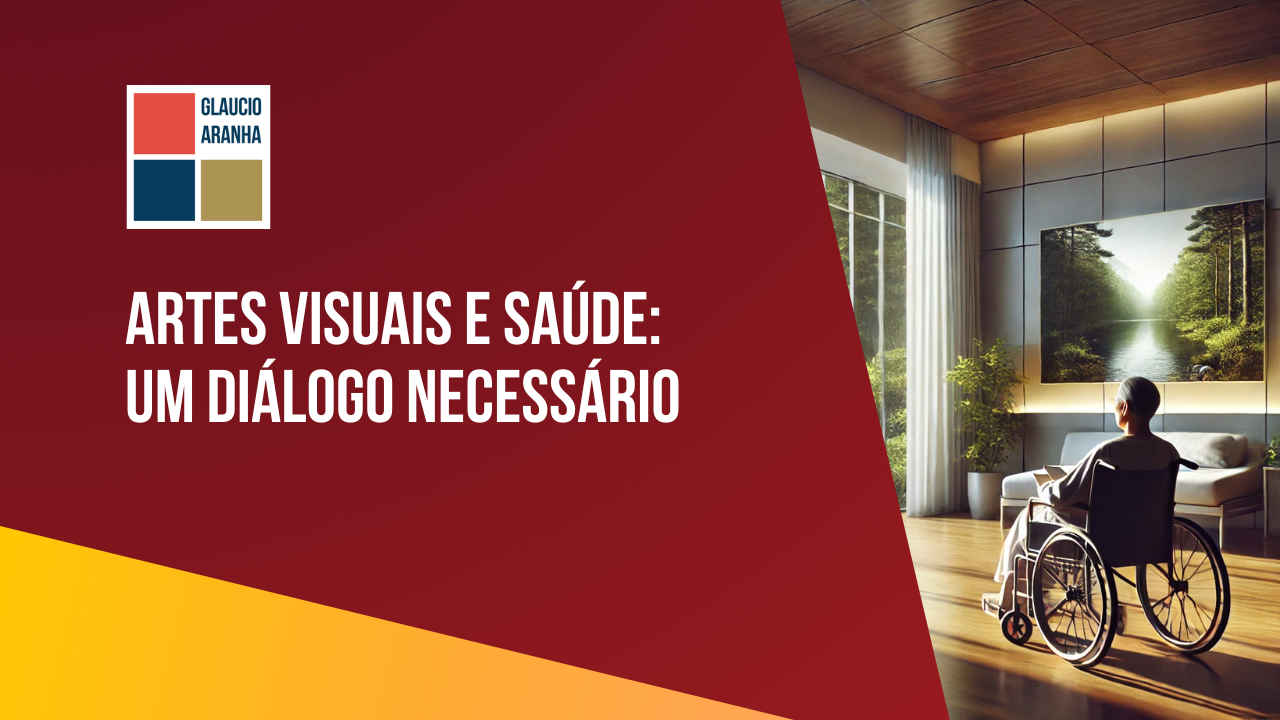
The relationship between image and health goes beyond aesthetics and science: it is a mirror of the human condition, a universal language that crosses time and transforms how we perceive the body, illness and care. How can the visual arts help us understand the evolution of medical knowledge? How can creating and contemplating images prevent and treat illness, healing not only the body but also the mind? And how can these representations reshape the training of future health professionals, bringing new ways of seeing and intervening in human complexity? This text proposes a provocative journey through these questions, inviting you to explore the links between art, health and education through a critical and sensitive lens.
The Image and the History of Health
Throughout history, among many other roles, the visual arts can also be seen as a way of documenting and interpreting health practices. While the graphic representation of human health maps the transformations of medical knowledge, it also reveals how societies have understood the body, illness and healing. Through anatomical drawings, paintings and sculptures, images have become both records and expressions of scientific advances and cultural conceptions of health.
When we look, for example, at Leonardo da Vinci’s anatomical illustrations (Figure 1), we see not only a scientific representation of the human body but a reflection of Renaissance curiosity about nature and the human condition. In this sense, medical images act as a link between science and art, materializing the evolution of health knowledge over the centuries. They let us visualize its stages of progress, from early mystical and religious conceptions of illness to the advances of modern medicine, bringing knowledge onto the sensory plane.

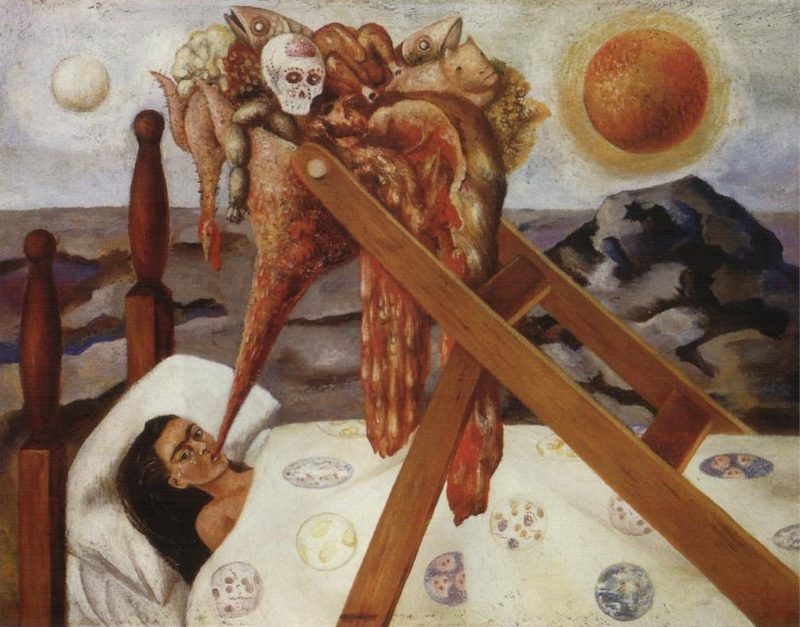
These representations also bear the marks of social and philosophical change. For a long time art was regarded as a mirror of human concerns, and health as one of the central themes of social life. In the twentieth century, for example, works such as those of Frida Kahlo (Figure 2) viscerally depict the experience of pain and illness while questioning the role of medicine in a mechanistic and dehumanizing society. By portraying her physical and emotional pain, works like Kahlo’s question medical objectivity, exposing the subjective suffering and human vulnerability that often remain on the margins of scientific discourse.
Likewise, representations of illness and marginalized bodies over the centuries have challenged norms, revealing how medical practice can sometimes be imbued with social, cultural and gender prejudice. This capacity of the arts to reveal ethical and humanitarian tensions deconstructs medical practice as a strictly biological domain of power and humanizes the debate, opening space for new voices and perspectives. Throughout history, then, we can see the great potential of the visual arts to challenge hegemonic narratives and reveal the ethical and humanitarian dilemmas that permeate medical practice.
Medical images have often reflected the power of each era’s science and technology over the body and illness. In some cases, the notion of health was strongly tied to the divine. El Greco’s “Healing of the Man Born Blind” (“La curación del ciego”) (1570), for example, depicts Jesus’ miracle of healing a blind man. It is a clear example of how health and healing were seen as direct manifestations of divine power, since the work shows supernatural forces intervening in the physical body. Caravaggio’s “Saint Francis in Ecstasy” (“San Francesco in estasi”) (1596), although not directly about physical healing, links suffering and spirituality as a connection between the body and the divine. In “The Plague at Ashdod” (“La peste d’Asdod”) (1630), Nicolas Poussin depicts a biblical scene (1 Samuel 5) in which a plague is sent to the Philistines as divine punishment, using it to illustrate the notion of illness as divine retribution. These and many other artists produced works we can read as expressions of the thinking of their times. In this sense, many artists challenged established views by bringing to light the ethical and humanitarian nuances neglected by the biomedical approach.


This capacity of art to reach the deepest layers of human experience prepares the ground for its use as a preventive and therapeutic resource. After all, by making possible expressions that go beyond verbal language, art can act as a means of healing, both emotionally and mentally.
The Visual Arts as Preventive and Therapeutic Approaches
The visual arts have significant potential not only as a way of documenting health but also as a preventive and therapeutic resource. When we delve into the concept of “art as healing”, we understand that the sensory and emotional interaction offered by images can work as a form of care and prevention. In hospitals, for example, it can support practices that seek to create more welcoming and humane spaces for both patients and health professionals.
In this context, art therapy stands out as a therapeutic approach that uses the creative process to promote mental and emotional well-being. Creating images, such as drawings or paintings, allows people to express their feelings, often non-verbally, while helping them cope with trauma and reduce stress. This kind of approach is used to treat a wide range of conditions, such as depression, anxiety and psychosomatic disorders, showing that the visual arts can be a powerful tool for mental health intervention.
The visual arts can also contribute to prevention by raising awareness of health issues. Public health campaigns often rely on striking images to make people aware of the importance of healthy habits, vaccination or screening. The communicative force of an image often transcends verbal language and reaches the collective imagination directly, stirring emotions and motivating healthier behaviour.
Finally, simply looking at works of art can also bring therapeutic benefits. Research indicates that contemplating certain images, such as nature scenes or paintings that evoke calm, can lower blood pressure and reduce cortisol levels. Gillis and Gatersleben (2015) reviewed the literature on how biophilic design, including the use of nature images in built environments, can promote health and well-being by influencing cortisol levels and other physiological stress responses. Ulrich (1984) showed that hospitalized patients with views of nature recovered faster and needed fewer painkillers than those without, highlighting the influence of nature imagery on well-being. Brown, Barton and Gladwell (2013) examined how viewing natural scenes aids stress recovery, lowering blood pressure and helping heart rate recover.
Thus, beyond being a historical record, the visual arts become an active strategy for promoting health, preventing illness and treating physical and mental disorders. By connecting with images that evoke calm, beauty and harmony, or that prompt reflection and self-examination, we find a path to healing that transcends words and touches our human essence directly. Whether through contemplating a serene landscape, a work of art that moves us or the creative expression that lets us externalize our deepest feelings, art proves to be a powerful ally in strengthening body and mind. It invites us to slow down, reflect and find balance amid chaos, opening new possibilities for living more fully and consciously. By integrating the visual arts into health practice, we broaden our horizon of healing, recognizing that human well-being is deeply linked to the transformative power of images and creativity.
References
Brown, D. K., Barton, J. L., & Gladwell, V. F. (2013). Viewing nature scenes positively affects recovery of autonomic function following acute-mental stress. Environmental Science & Technology, 47(11), 5562-5569. DOI: 10.1021/es305019p
Gillis, K., & Gatersleben, B. (2015). A review of psychological literature on the health and wellbeing benefits of biophilic design. Buildings, 5(3), 948-963. https://doi.org/10.3390/buildings5030948
Ulrich, R. S. (1984). View through a window may influence recovery from surgery. Science, 224(4647), 420-421. DOI: 10.1126/science.6143402
Deixe um comentário