
By Glaucio Aranha
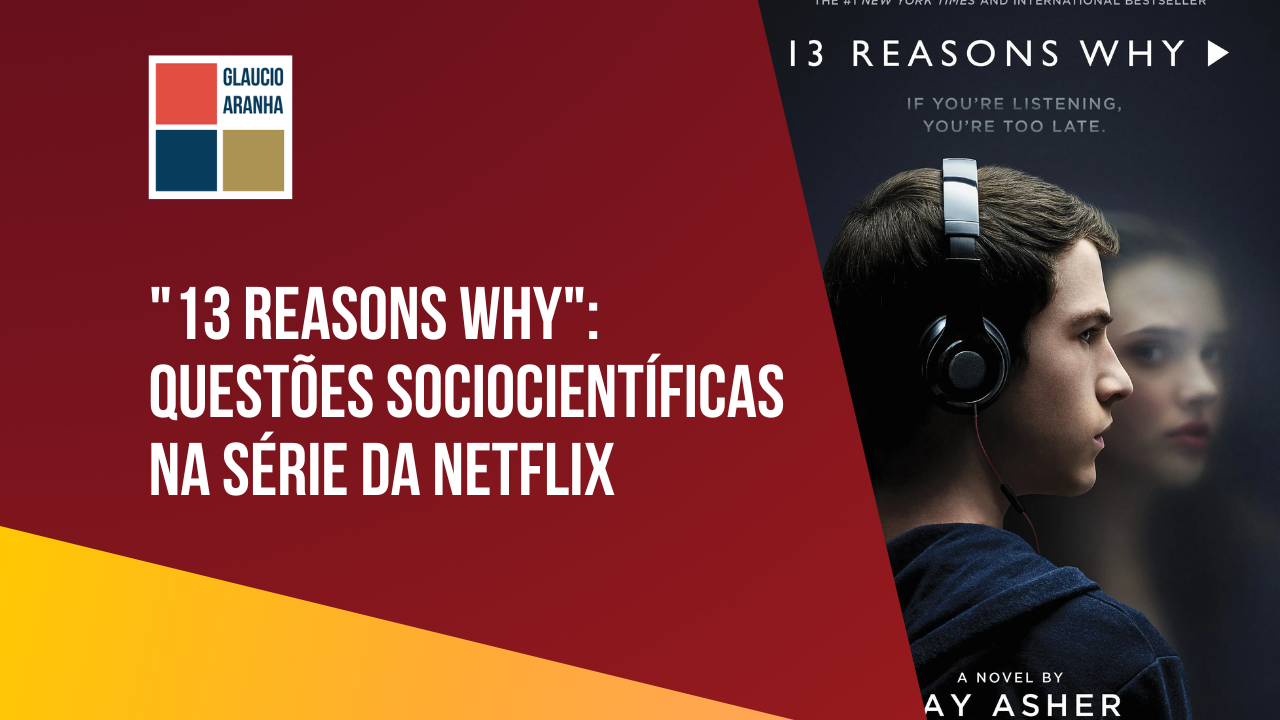
The Netflix series “13 Reasons Why” caused a considerable stir after its premiere in March 2017. Based on Jay Asher’s novel of the same name, the first season delved into socioscientific topics such as depression, substance use, teen suicide, bullying, sexual assault and others. The scientific article “Popular media as a double-edged sword: An entertainment narrative analysis of the controversial Netflix series 13 Reasons Why”, by Hua Wang and Juliet Parris, published in PLOS ONE in 2021, offers a critical analysis of this controversial series.
The series stood out for its dual purpose: to entertain and to spark conversations about topics that are often avoided. However, controversy arose mainly around the scene depicting the suicide of the main character, Hannah, leading to debates about its portrayal and impact. More than six years after the initial controversy and dozens of subsequent academic publications, this study was the first to examine in detail the entertainment narrative content of the first season.
The authors based their analysis on the principles of framing theory and social cognitive theory in communication research and media studies. They took a narrative analysis approach to investigate all 660 scenes across 13 episodes. Their findings provide essential empirical evidence, contextualized with detailed examples, showing that a popular entertainment series also acts as a double-edged sword.
While the production team deserves praise for having the courage to address social and mental health issues affecting young people, the analysis also reveals areas where the series could have exercised greater social responsibility. “13 Reasons Why” is a vivid example of the important role media play in meaning-making in contemporary society. It challenges the conventional limits of television narratives, opening space for deep discussions about the world around us. However, it also warns us of the need to carefully consider the impact of the stories we tell, especially on such sensitive issues.
Wang and Parris’s article is valuable reading for anyone interested in the intersection of media, semiotics and meaning-making. It offers a critical view of how popular media can influence the perception and understanding of socioscientific issues, while reminding us of the importance of greater care and responsibility in contemporary audiovisual storytelling.
Reference
Wang, H., & Parris, J. J. (2021). Popular media as a double-edged sword: An entertainment narrative analysis of the controversial Netflix series 13 Reasons Why. PloS one, 16 (8), e0255610. https://doi.org/10.1371/journal.pone.0255610
Deixe um comentário